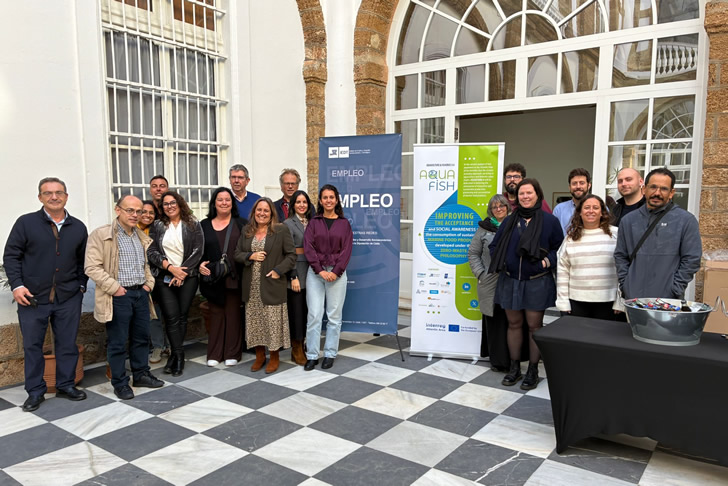
AQUAFISH consortium meets in Cádiz to advance circular economy in fisheries and aquaculture
The AQUAFISH Consortium met in Cádiz to hold its 5th biannual meeting, hosted by our partner IEDT in Cádiz (Spain) on 25 November. Representatives from all 10 partner organisations took part, with a total of 19 attendees travelling to Cádiz.
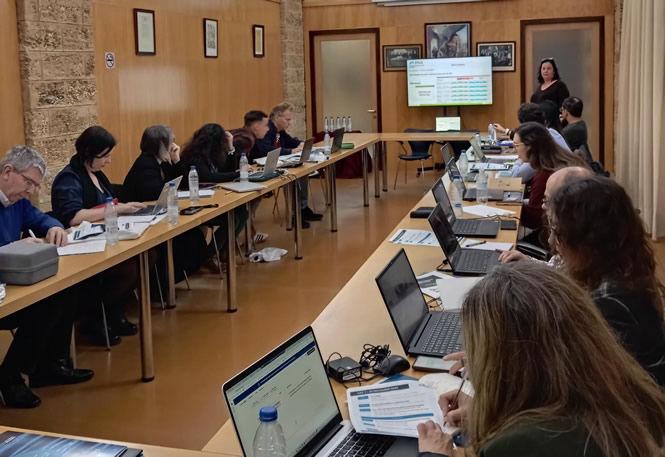
The meeting provided an opportunity to review project progress and to focus on the next milestones towards advancing a circular economy in fisheries and aquaculture. Over the last six months, the main efforts have been concentrated on product transformation and social acceptance.
Two innovative prototypes were developed and tested during the second tasting panel organised as part of the meeting: a fish seasoning with anchovy developed by CTAQUA, and smoked turbot sausages produced by S2AQUACOLAB.
TQC presented preliminary results of the economic analysis of innovative marine products, identifying key economic dynamics, drivers, levers and barriers. The analysis also examined market trends in marine by-product recovery across three different segments. In addition, a strategic assessment was conducted to identify opportunities for the valorisation of marine by-products in four Atlantic Area countries. These results will be made available on the AQUAFISH website in the coming months.
Several activities related to social acceptance were also carried out, including educational visits to schools and cooking workshops in which children prepared the products themselves, organised by IPMA and ARDITI. CEEI is currently setting up an Aquaculture Remote Classroom, and during the meeting participants were able to test the virtual reality cooking game under development by ESIEA.
Overall, the meeting reinforced the importance of joint efforts among partners and reaffirmed the need to continue advancing circular solutions that enhance the value of marine resources and promote the sustainable growth of the fisheries and aquaculture sectors.
AQUAFISH 0.0 is a project funded by ERDF through the INTERREG Atlantic Area 2021-2027 programme (project code EAPA_0062/2022).